BJP calls Rahul Gandhi 'Bhmasura', predicts Congress split
 May, 26 2026
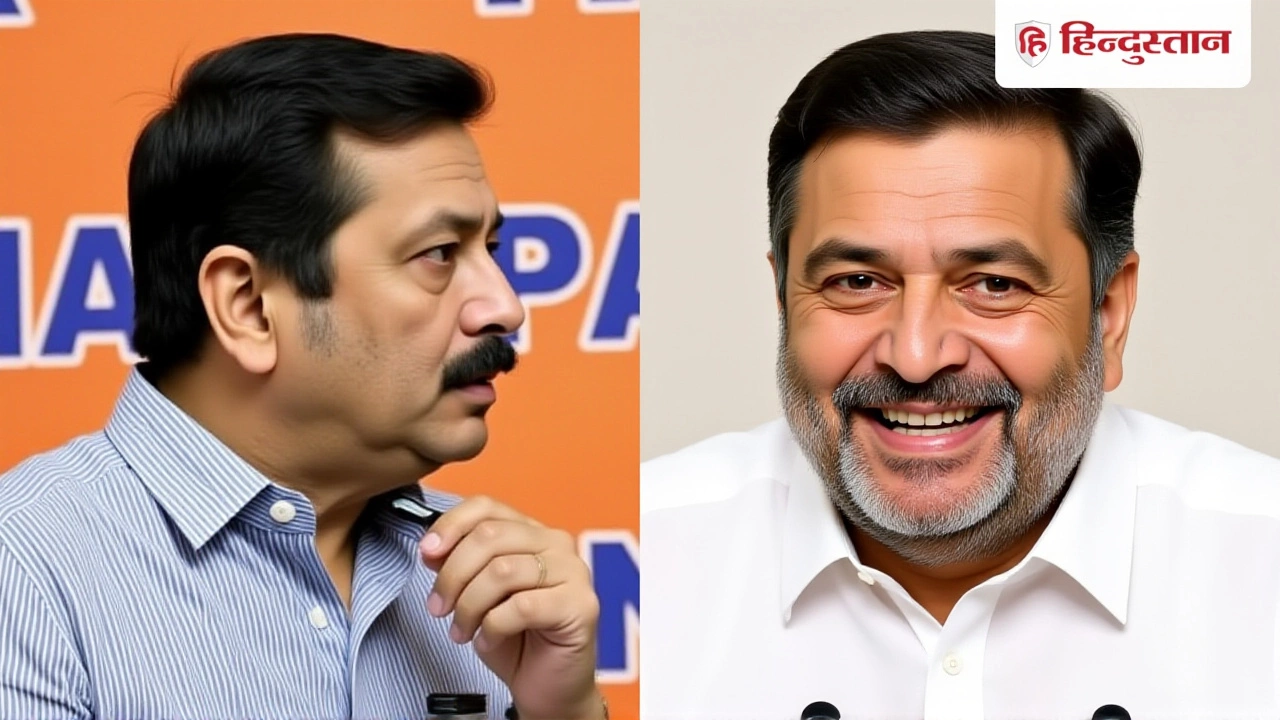
When Gaurav Bhatia, spokesperson for the Bharatiya Janata Party, took the stage in New Delhi on May 25, 2026, he didn't mince words. He labeled Opposition Leader Rahul Gandhi a "Bhmasura"—a mythological demon who destroys himself through his own power—and predicted that the Indian National Congress would fracture into two distinct factions within just one year.
Here’s the thing: political rhetoric in India has always been fiery, but this specific combination of mythological insult and precise timeline prediction marks a significant escalation. The press conference wasn’t just an attack; it was a forecast. Bhatia claimed that internal rebellion against the so-called "fake Gandhi family" is imminent, suggesting that the opposition’s current unity is merely a facade holding together by threads.
The Mythological Insult and Its Meaning
Calling someone a "Bhmasura" isn’t just name-calling. In Hindu mythology, Bhmasura was a powerful demon who believed he could only be killed by his mother. His arrogance led to his downfall when Lord Shiva disguised himself as a woman to defeat him. By using this term, the BJP is implying that Gandhi’s strength is actually his fatal flaw—that his leadership style is self-destructive and will ultimately consume the party he leads.
Bhatia went further, adding a twist that caught many off guard. Reports from ABP Live Hindi and Vanindia Hindi noted that BJP leaders also said, "He was Bhmasura before, now he has become a Jyotish (astrologer)." This jab suggests that Gandhi has shifted from being a destructive force to making unfounded predictions about politics, much like an astrologer predicting events without basis. It’s a subtle way of dismissing Gandhi’s recent political strategies as mere fortune-telling rather than grounded policy.
The "Toolkit" Accusation Returns
The controversy isn’t new. Bhatia reiterated the old accusation that the "toolkit model"—a strategy allegedly used by the Congress party to coordinate protests and social media campaigns—is Gandhi’s own creation. Panchjanya, a prominent Hindi publication, highlighted this claim, stating that the toolkit approach involves aggressive propaganda and international image-building campaigns designed to spread chaos.
"The toolkit model is Rahul Gandhi's own produce," Bhatia stated during the briefing. This allegation implies that every coordinated protest or social media narrative emerging from the opposition is centrally planned by Gandhi himself. While the Congress party has repeatedly denied these claims in the past, the BJP continues to use them as evidence of what they call "planned anarchy."
Predicting a Split Within 12 Months
The most striking part of the announcement was the timeline. Bhatia didn’t just say the Congress might weaken; he specified that it would break into two parts within one year. "In one year, two splits will happen in Congress," he declared. This bold prediction suggests that the BJP believes internal dissent is already at a boiling point.
Why one year? Political analysts suggest this timeframe aligns with upcoming state elections and potential reshuffles in national leadership. If true, such a split would significantly alter the balance of power in Indian politics. However, concrete evidence of impending fractures remains scarce. As of now, the details are still unclear regarding which factions might break away or who would lead them.
Media Reaction and Public Sentiment
Coverage across major Hindi news outlets—including ABP Live, Vanindia, and Panchjanya—focused heavily on the severity of the language used. YouTube reports echoed the same themes, with headlines asking, "Who is this dignitary...?" referring to Bhatia’s rising prominence within the party structure.
Social media reaction was mixed. Some supporters praised the BJP for directly challenging the opposition’s narrative, while critics argued that personal attacks distract from substantive policy debates. Interestingly, there was no immediate official response from the Congress party or Gandhi’s office at the time of reporting. That silence itself speaks volumes—or perhaps says nothing at all.
Broader Implications for Indian Politics
This verbal assault comes at a critical juncture. With national elections potentially on the horizon, both parties are sharpening their knives. The BJP’s strategy appears to be weakening the opposition from within by amplifying existing tensions. Meanwhile, the Congress faces pressure to prove its cohesion and relevance beyond personality cults.
If the BJP’s prediction holds true, we could see a realignment of alliances in the next twelve months. But if it doesn’t, the credibility of the ruling party’s forecasting ability may take a hit. Either way, the stakes are high for everyone involved.
Frequently Asked Questions
What does calling Rahul Gandhi 'Bhmasura' mean?
In Hindu mythology, Bhmasura was a demon whose arrogance led to his self-destruction. By using this term, the BJP implies that Gandhi’s leadership is inherently self-defeating and will cause harm to his own party. It’s a metaphorical critique suggesting that his methods are unsustainable and dangerous to the Congress organization.
Is there any evidence supporting the claim of a Congress split?
As of May 2026, there is no public evidence confirming an imminent split within the Indian National Congress. The claim originates solely from BJP spokesperson Gaurav Bhatia’s statements during a press conference. Political observers note that while internal disagreements exist in all major parties, predicting a specific timeline for fragmentation remains speculative without insider confirmation.
What is the 'toolkit model' accused against the Congress?
The 'toolkit model' refers to alleged coordinated efforts by the Congress party to organize protests, manage social media narratives, and influence public opinion through centralized instructions. The BJP accuses Rahul Gandhi of originating this strategy, claiming it aims to create instability. The Congress has consistently denied these allegations, calling them baseless conspiracy theories.
How did the media respond to the BJP's statements?
Major Hindi news platforms like ABP Live, Vanindia, and Panchjanya extensively covered the press conference, focusing on the harsh language and specific predictions made by Gaurav Bhatia. Social media reactions were polarized, with some viewing the comments as necessary political criticism and others seeing them as divisive rhetoric. No immediate rebuttal from the Congress side was reported initially.
Who is Gaurav Bhatia and why is he speaking for the BJP?
Gaurav Bhatia serves as a key spokesperson for the Bharatiya Janata Party (BJP) in New Delhi. He frequently represents the party at press conferences, articulating its stance on various political issues. His role involves communicating the party’s narrative to the media and public, often employing strong rhetorical tactics to highlight perceived weaknesses in the opposition.