Hussain Talat's Heroics Rescue Pakistan in Asia Cup Clash Against Sri Lanka
 Nov, 27 2025
When Hussain Talat walked in to bat at 80 for 5 chasing 133 against Sri Lanka on Tuesday, September 23, 2025, Pakistan’s Asia Cup hopes were hanging by a thread. No one expected the 29-year-old left-handed all-rounder — often overlooked in favor of flashier names — to single-handedly drag his team back from the brink. But that’s exactly what he did. With 2 for 18 in three overs and an unbeaten 32 off 30 balls, Talat not only saved Pakistan from collapse but also reignited their fading title dreams in the DP World Asia Cup 2025 Sheikh Zayed Cricket Stadium. The win, by five wickets with two overs to spare, was as much about resilience as it was about skill.
A Collapse Avoided, a Team Revived
Pakistan’s chase had looked doomed. After losing three wickets inside the first six overs, the middle order crumbled under Sri Lanka’s disciplined spin attack. By the 10th over, they were 80 for 5 — the same score they’d managed in the first 10 overs of their innings. The crowd fell silent. The commentators held their breath. Then Talat arrived. He didn’t smash boundaries. He didn’t try to be a hero. He anchored. He rotated strike. He punished the loose deliveries. And when Mohammad Nawaz joined him — 38 not out off 24 balls — they built an unbroken 53-run partnership that turned panic into poise. Sri Lanka, who had looked dominant all day, suddenly looked rattled. Their bowlers overpitched. Their fielders shifted nervously. By the time Talat tucked the final ball to fine leg for the winning runs, the stadium erupted.The Weight of the Middle Order
In his post-match press conference, Talat didn’t celebrate just his own performance. He spoke about the systemic rot in Pakistan’s batting structure. "It’s the most difficult thing to play in the middle order," he said. "You have to play all three types of cricket — spin, pace, death overs — and no one gives you the time to grow into it." His words cut deep. He revealed that only four or five players in Pakistan’s system can handle this role across formats, and even those players are reluctant to take it on. It’s a crisis that’s been building for years. In T20s, the middle order is supposed to be the engine — the bridge between explosive openers and finishers. But Pakistan’s middle order has become a graveyard of potential. Players are shuffled in and out. No one is given the trust to build an innings. Talat, who’s been in and out of the side for seven years, knows this better than most. "In the past, if you failed once, you were gone," he said. "Now, the management is backing us. That changes everything."A Player Who Defies Expectations
Talat’s style isn’t loud. It’s quiet, elegant, almost effortless. Analysts describe his batting as defined less by power than by touch — a wide stroke range born not from coaching manuals, but from playing on Lahore’s concrete pitches as a kid, where boundaries were short and aggression was survival. He learned to hit through the line, to use the gaps, to rotate strike without losing momentum. His 51 not out against Lahore Qalandars in Peshawar Zalmi during PSL 2025 was a masterclass in controlled aggression. So was his 41 in the first ODI against the West Indies in August 2025, where he rescued Pakistan after a middle-order collapse. He’s not a flashy name. He doesn’t trend on social media. But in high-pressure moments, he’s become Pakistan’s secret weapon.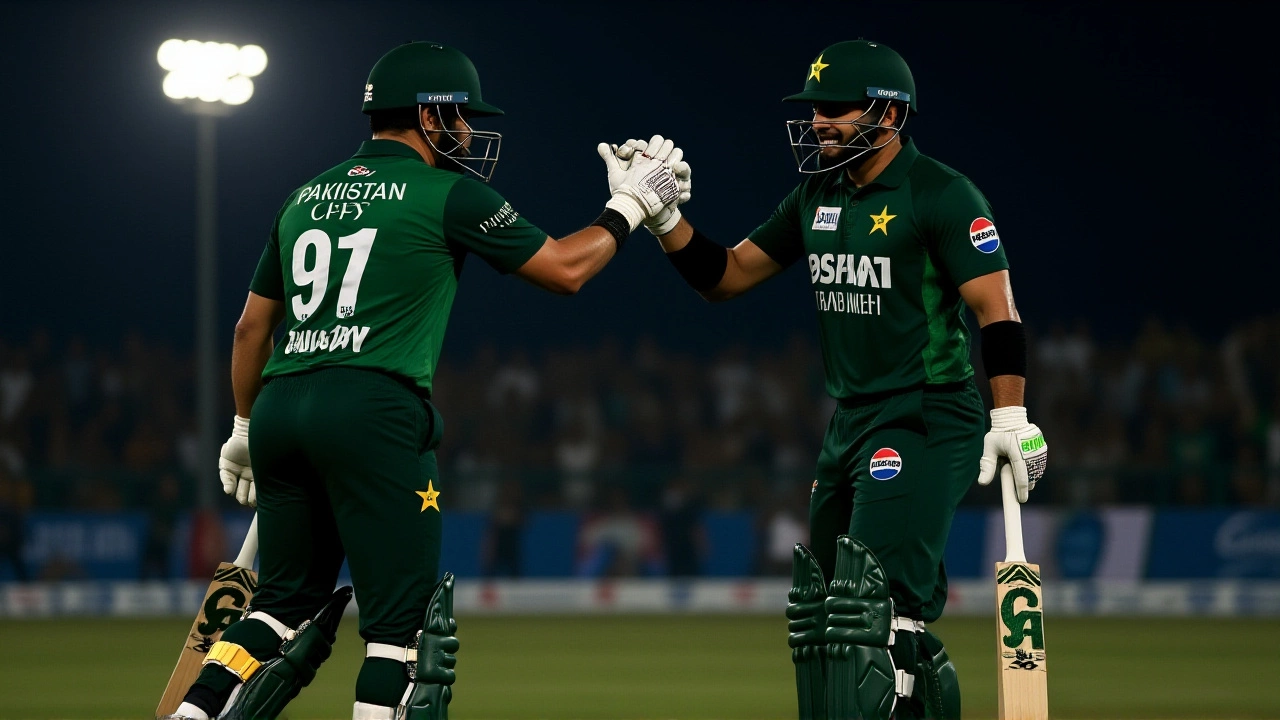
What’s Next? The Path to the Final
Pakistan’s victory over Sri Lanka didn’t just keep them alive — it reset the entire tournament narrative. After a six-wicket loss to India on September 21, they were 0-2 in the Super 4s. Now, with one win against Bangladesh on Thursday, September 25, 2025, they’re back in the final. A win would mean a potential rematch with India — the team that crushed them just days before. Talat’s confidence is contagious. "We’ve been playing non-stop cricket," he said. "The camp is good. The energy is there. If we play two good matches, the trophy will be ours." For Sri Lanka, the loss sealed their elimination. Their campaign, built on early promise, unraveled under pressure. Captain Charith Asalanka’s side managed just 133 — their lowest total in the tournament — and couldn’t handle Talat’s disciplined bowling or Nawaz’s finishing touch.Why This Matters Beyond the Scoreboard
This isn’t just about one match. It’s about identity. Pakistan cricket has spent years chasing the next big thing — the next Babar, the next Shaheen — while neglecting the quiet builders. Talat represents the overlooked, the undervalued, the player who survives because he adapts, not because he’s gifted. His rise is a rebuke to the system that keeps cycling through middle-order batsmen like disposable parts. If Pakistan reaches the final, it won’t be because of star power. It’ll be because someone like Talat refused to quit when everyone else had.Frequently Asked Questions
How did Hussain Talat’s performance compare to other all-rounders in the Asia Cup 2025?
Talat’s 2/18 and 32* were the most impactful all-round figures in the Super 4 stage. No other player in the tournament has matched his combination of economical bowling under pressure and match-winning batting with the team at 80/5. His strike rate of 106.66 in the chase was higher than any other Pakistan batter in the death overs, and his economy rate of 6.00 was the best among Pakistan’s top five bowlers in the tournament.
Why is the middle order such a problem for Pakistan’s cricket team?
Pakistan’s middle order lacks continuity, confidence, and long-term development. Unlike teams like India or Australia, which groom middle-order specialists through domestic structures, Pakistan rotates players based on short-term results. Talat himself noted that only four or five players across the country can handle all three formats in this role — and many avoid it due to fear of failure and frequent benchings.
What impact did the loss to India have on Pakistan’s mindset before the Sri Lanka match?
The six-wicket defeat to India on September 21 left Pakistan’s squad demoralized, with criticism flooding social media and local media. But Talat said the team consciously avoided external noise. Instead of dwelling on the loss, they focused on small wins — fielding drills, net sessions, and mental resilience talks. This shift in focus, combined with management backing, created a calm environment that allowed Talat and Nawaz to rebuild without panic.
Can Pakistan realistically win the Asia Cup now?
Yes — but only if they defeat Bangladesh on September 25, 2025, and then beat either India or Bangladesh again in the final. Their path is narrow, but not impossible. They’ve shown they can win under pressure, and Talat’s form suggests they have a finisher who thrives when the stakes are highest. Their bowling attack, led by Shaheen Afridi and Haris Rauf, remains potent, and if the middle order holds together, they’re dangerous.
What makes Hussain Talat different from other all-rounders in Pakistan’s squad?
Unlike others who rely on raw power or pace, Talat survives on timing, adaptability, and mental toughness. He doesn’t dominate the strike — he controls it. His medium-fast bowling is deceptive in tight overs, and his ability to bat through the middle — even when the team is crumbling — is rare. Most Pakistani all-rounders are either pure bowlers or finishers. Talat is the bridge — the one player who can stabilize and then accelerate, which is exactly what Pakistan needs.
Where did Talat develop his unique batting style?
Talat honed his skills on Lahore’s cement wickets — hard, fast, and low-bouncing — where defensive play was useless and stroke-making was survival. Small grounds and aggressive local coaching encouraged power-hitting, but his elegance came from watching older players who used angles and footwork over brute force. This blend of aggression and touch, forged in local club cricket, is what makes him so effective in modern T20s.